Editorial Note
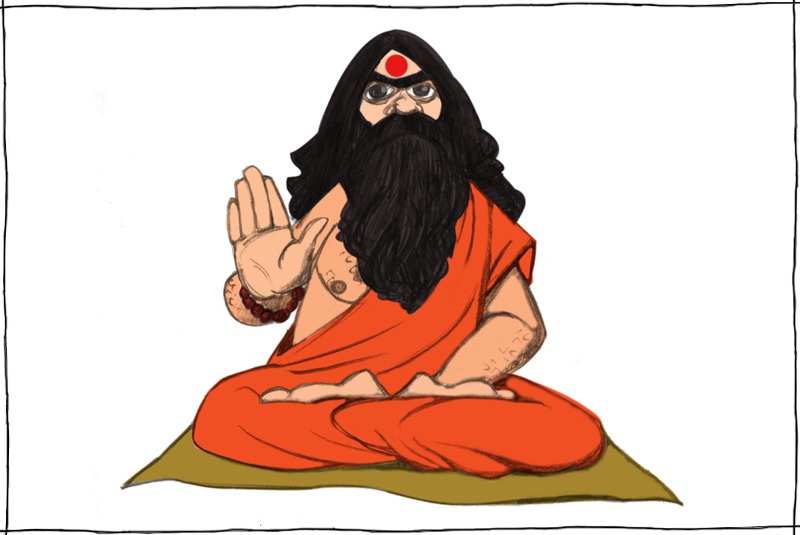
The self-appointed Godmen of the twentieth century eschewed asceticism and chose a life of opulence, fanfare & power-politics.
The word ‘Guru’ that has iterated, notoriously, into ‘Goldman’ in contemporary India does not find mention in the oldest spiritual texts of the Vedas. The Vedic precept of salvation was exclusively sacrificial in nature and concept, and it wasn’t until the age of Vedanta or Upanishads (when the focus shifted to Jnana or knowledge as the pre-requisite of ‘moksha’ or liberation of the soul from the cycle of re-birth) did the need of a Guru warrant to impart that eclectic knowledge. The Pauranika and Tantrika schools of thought in AD 300 transformed Guruism into an institutional lineage, doctrinally sectarian and with the advent of Sikhism in the 15th century, the institution of Guru was redefined structurally into a religio-military entity of the Godman.