Editorial Note
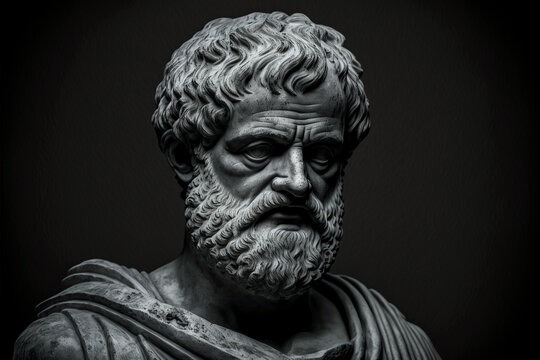
Aristotle, the mercurial Greek philosopher, in the 4th century BCE, wrote a seminal treatise on persuasion, conceiving it as an art form
Persuasion is central to human existence and is the hallmark of civilizational societies functioning under a rule of law. It could be an evolutionary trait, humans have imbibed for their group survival. The development of languages and speech, end of Ice Age and the beginning of Holocene epoch, when hunter gatherer tribes were replaced by agrarian societies, required continous human engagement, collaboration and conflict resolution. Primordial impulses and anarchic traits that dominated human behavior in a fight or flee environment were replaced by persuasion and negotiation for collective harmony.
Aristotle, the mercurial Greek philosopher, in the 4th century BCE, wrote a seminal treatise on persuasion, conceiving it as an art form. Its theoritical framework is enshrined as a compendium of three books under the moniker Rhetoric. Aristotle systematically analyzed human behavior and its sensitivities to develop powerful techniques for successful persuasion. Not only did the great polymath lay down the foundations of the art of persuasion, but also gave the world a treatise that continues to inspire savants and tyros of persuasive speaking with its timeless quality.
For effective public speaking, Aristotle lists three essential means of persuasion. The intended outcomes are dependent on Ethos, the character or credibility of the speaker, Pathos or the emotions of the hearer or the audience and Logos, the logic and rationality of the argument itself. If Aristotle’s Poetics is a blueprint to compose great tragedies, Rhetoric is an instruction manual aimed at instilling productive knowledge for fabrication of speech akin to a potter fabricating vessels or a watchmaker fabricating watches. The audience can be influenced only under a synchronous operation of Ethos, Pathos and Logos.
Ethos
The first criteria, Ethos denotes that persuasion is accomplished only when an audience renders the speaker worthy of credence. The public in general are motivated and swayed by trustworthy people and therefore ones character assumes great significance in persuading the judgement of the masses. Arthur Freed, the celebrated Hollywood lyricist and producer famously said, “ Don’t try to be different. Just be good. To be good is different enough.” Seasoned orators as well as beginners have to establish trustworthiness with their targeted listeners.
The credibility of the speaker is dependent on three interdependent variables that are not mutually exclusive. An effective speaker must display (i) practical knowledge, prudence and empathy (ii) ethical character and (iii) good will. Even if the speaker sounds perfectly logical and rational, if he lacks the emotional resonance of trust with the audience, his message will be rendered futile. He has to exhibit great professionalism, calmness and composure and emotionally sound to take criticisms and acknowledge his flaws to win the trust of the audience. Rude and unempathetic responses to grievances and slander from the audience tarnishes the goodwill of the speaker. The speaker has to gain faith and win confidence of the hearers through the elements of a carefully crafted speech. It is not necessary that their virtues and uprightness are pre-known, nor have they to be celebrities, where the masses instantly have awareness and recall.
A new speaker, lesser known or unknown could appear as credible and competent as a known one if they give emphasis on the above prerequisites of Ethos – of practical knowledge, virtuous character and goodwill. For example, a climate scientist or a doctor or a social activist narrating their number of years of experience, domain expertise and how it had impacted and benefited communities could be a good starting point, as a dropped introduction in a speech to establish their credibility with their audience.
Pathos
It is an irony of life that however man perceives himself as a rational being, is still a prisoner of the cognitive bias of bounded rationality. It means that while making decisions, he uses less of reason and consequently rationality has its limits. Emotions play a predominant role in judgement of the masses and therefore an effective speaker is one who deftly invokes the emotions of the audience congruent to the desired interpretational response from them. Aristotle writes, “Educating the mind without educating the heart is no education at all.” The persuader/speaker should have clarity on the nature and type of audience being addressed. It warrants meticulous and assidous research on psychographic factors like (i) who are they? (ii) what are their motives, interests and needs? (iii) what are their values and aspirations? (iv) what areas do they agree and disagree? (v) what would be the likely barriers, technical and pychological? (vi) what are the strategies, the emotional triggers to overcome objections?
Prior to a speech, it is indispensible that he expends considerable amount of time understanding the target audience and framing strategic tools and responses to influence them. A foundational principle of selling is that people buy not because of logic but emotions. People buy stories rather than products and services.
A compelling story or a narrative that resonates on an individual level with the audience is a powerful tool to set them on an emotional path of least resistance and favorable outcomes. For example, an environmental activist protesting against a proposed but controversial climate bill, will have better sympathizers and supporters if he emotionally appeals to the number of villages/villagers (stakeholders) the bill will impact. By both quantifying the economic costs and by juxtaposing and qualifying it with the social costs to the affected people – how their livelihoods will be destroyed, forced displacements and by “deprivation argument,” how it will jeopardize the future of their children – the speaker leaves a powerful incentive for action against the proposed bill. Helen Keller states, “The best and most beautiful things in the world cannot be seen or even touched. They must be felt with the heart.”
Logos
Logos, contrasting ethos and pathos is the only probative device of persuasion, consisting of premises, facts and conclusions, built on an argument-like structure. It is imperative that the speaker presents his arguments by employing logic, clarity of thought and expression, avoiding logical fallacies and by providing data based evidence. Probative persuasion is absolutely critical since every speech is centered on a claim and it is critical to supply with proofs and corraborating evidences to support the claim. The speaker is at liberty to anchor his proposition in inductive or deductive logical arguments, suitable to the audience and theme. Ultimately such arguments need to make sense, justifying these in a language that is clear, cogent and succint.
During the 1944 US presidential elections, incumbent President Franklin. D. Rooselvelt appealed to the American voters with a powerful slogan, “Don’t change the horses midstream”, signifying the risks lurking in a change of office amidst turmoil and conflict. In this context, the ongoing World War II and the Manhattan Project of developing the nuclear bomb – post Pearl Harbor attack – assumed existential significance for the sovereignty and image of the United States. This rhetorical device was purely logical that resonated among the electorate and Franklin. D. Rooselvelt comfortably secured a fourth term. At the grim prospect of growing authoritarianism in a country, an opposition politician exhorting Lord Acton’s perennial quote, “Power corrupts and absolute power corrupts absolutely,” makes a classic case of Logos in action.
Peruasive communication, especially the art of public speaking is not just a soft skill, but often regarded as a fundamental skill. Studies have empirically proved that one who is adept in persuasive skills, enhances his professional value by more than 50%. Aristotle’s influential treatise, Rhetoric and the rhetorician is not as much as the perfection of the product, which, is an excellent speech, than someone who constantly explores ways to be persuasive in any given situation.
Persuasion is second nature to human psyche, which, is inadvertently done from childhood, when kids persuade their parents to buy them candies or hurtling a volley of entreaties to be spared of the cane. But to transform that innate skill into a strategic tool, requires dedicated practice. The speaker should refrain from using long, complicated and dramatic words nor should he attempt to trigger cascading emotions, in which case, he loses both the message and the plot. Also, one of the foundational knowledge of persuasion is that rhetoricians will be unable to convince each and every person in the audience. It is analogous to a physician who is proficient in the entire gamut of healing methods and who is a master of his craft, but fails to heal each and every patient. But to transition from an amateur to a professional public speaker, one should possess and master, all the available technical and functional means of persuasion. The culmination of the skill of persuasion, however, is the masterly and artful interspersion of ethos, pathos and logos in a seamless array of words and wisdom.