Editorial Note
Morocco is a part of the Arab League, which, is a regional cooperation initiative to foster closer cultural and political ties, preserve sovereignty and promote trade and commerce.
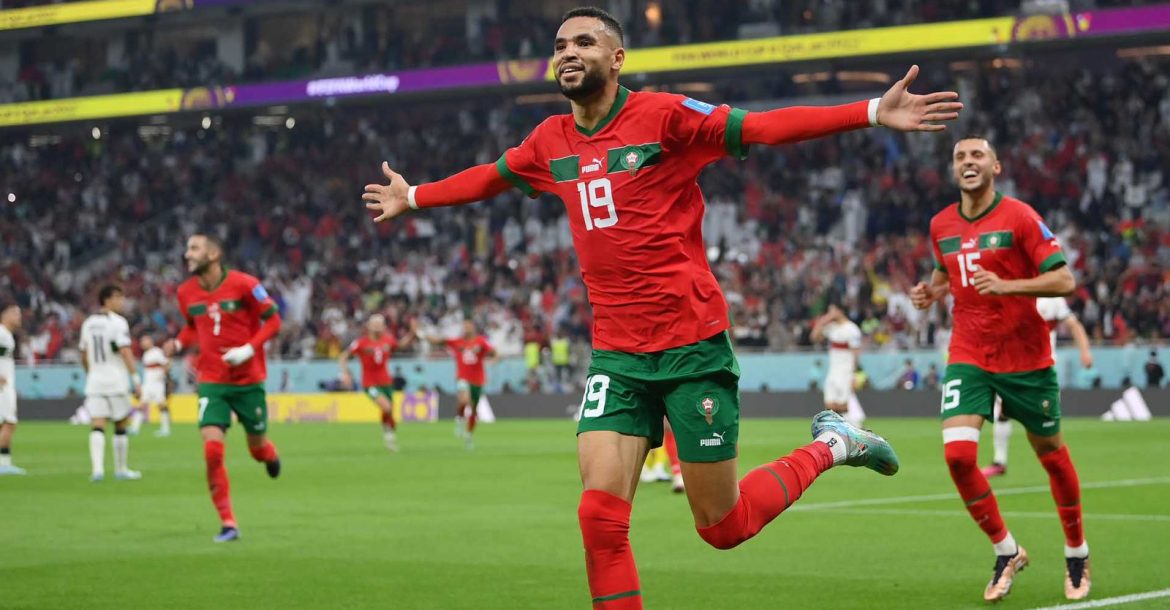
Morocco has been the dark horse of the FIFA World Cup tournament. It became the first African and Arab nation to qualify for the semifinals, drawn against formidable France. The underdogs have been ousting stellar opponents from the league matches to the knockout phase. While they defeated Spain in penalty shootouts in pre-quarterfinals, they stunned favorites Portugal in the quarterfinal match that left the aging warhorse Cristiano Ronaldo crestfallen, as his dreams of winning the coveted title before his retirement, crashed against the impregnable defense of Morocco. They adopted a defense-heavy 4-1-4-1 formation that gave many stellar opponents a run for their money to score against the star-studded Moroccan goalkeeper. The strategic plan has yielded spectacular results, as they have conceded only one goal, which, incidentally was a self-goal against Canada en-route to the semi-finals. Jubilations reverberated in the whole of Africa and the Arab world, trying to appropriate Morocco’s scintillating performances as a victory to both the Arab world and African continent, from centuries of oppression through colonization.
If Morocco wins against France, it will be defining moment in World Cup history, an unprecedented anti-colonial trifecta, where the colonized would have beaten all three colonizers in Portugal, Spain and France. Morocco was a Spanish colony as early as 15th century, occupying strategic ports along the Moroccan coast. Still, Spain has jurisdiction over Ceuta and Melilla enclaves that are the only European Union land borders with Africa. The Atlas Lions were also colonized by Portugal from 1415 to 1769. Cristiano Ronaldo is an icon in Morocco, having a huge fan-following of nearly 50% of the population. Often footballing rivalries are centered on fans taking sides of either Real Madrid or FC Barcelona in cafeterias which, is a cultural meeting point to watch and discuss the “beautiful game”. Most of the 26 players in the Moroccan squad are born and raised outside the country, in Spain, France and other parts of European hinterland, owing to massive exodus by immigration to their former colonizer lands. Hordes of Moroccans were recruited to fight World Wars and work in factories and farms at the turn of the 20th century. The French conscripted Moroccans massively in the early years of its occupation to fight as foot-soldiers on the Western Front. In fact, Moroccans and especially North Africans had a substantial role to play in building 20th century Western Europe.
Though European colonization had formally ended in 1956, the vestiges and remnants of colonization are ubiquitous across Morocco. From language, culture and cuisine, Moroccan life has become an amalgamation of cultural ethos of their colonizers. Moroccan expatriates in European lands have been able to keep their identity, culture and values mostly intact. Couscous and Tagine, the iconic Moroccan dishes are staple of French cuisine. By contrast, baguettes and croissants are universal in Morocco and the elites pride themselves in conversing in French. While integrating into European societies, especially Spain and France, Moroccans have retained the Arab and Islamic virtues too. Achraf Hakimi, the chiseled right back is greeted with kisses from his mother in the stands, who emigrated to Madrid as a house cleaner.
Family solidarity and reverence for the mother, cardinal virtues in Islam are zealously adhered. Sofiane Boufal, the attacking midfielder, born in Paris was seen dancing with his mother on the field, post downing Portugal. The national side’s coach and manager, the deft tactician Walid Regragui, climbed the stands to offer his mother, a kiss after trouncing Spain in penalties. These enduring images resonate around the Arab World, engendering massive support for the underdogs, making the team their own. Many players who had the choice to represent their European country of birth in World Cup finals, opted to re-group and play for Morocco due to their strong roots and affinity for their original homeland. Hakim Ziyech, who plays for Chelsea in the UK could play for Netherlands. He was quoted as saying, “My mother told me to just listen to my heart”. And his heart chose Morocco. So is Sofyan Amrabat, touted as the midfield general, eschewed Dutch representation to adorn the Moroccan jersey.
Though 99% of Moroccans are Sunni Muslims, their cultural identities are somewhat fluid. A majority don’t associate themselves as Arabs, but of Berber descent having their own indigenous dialect called Tamazight, heavily influenced by Spanish and French. The pristine Arabic speaker across Middle East, consider Moroccan Arabic dialect known as Darija as an anathema, quite corrupted and having trouble comprehending. This is due to the fact, that Moroccan culture is an amalgam of Atlantic, Mediterranean, Arab, African, Saharan, Amazigh and Middle Eastern. The Arab nationalism, which Morocco is a part of is fashioned and heavily influenced by centuries of Ottoman rule and European colonization. Therefore, Arab identity and political causes are intrinsically woven into the Moroccan psyche. It found expression off-field, when the players unfurled a Palestinian flag post-encounter with Spain. This gesture has received outpouring of support from the Arab world, who still perceive Israeli occupation of Palestinian lands as immoral and an act of gross injustice. It is interesting to note that according to a Times of Israel report, African Jews and Arabs in Israel were ecstatic and danced in jubilation in the streets of Tel Aviv and northern towns of Wadi Ara, Baqa al-Gharbiyye and Bu’eine Nujeidat, following Moroccan victory over Portugal. The game of football truly is a great leveler.
Morocco is a part of the Arab League, which, is a regional cooperation initiative to foster closer cultural and political ties, preserve sovereignty and promote trade and commerce. Nevertheless, the intra-Arab trade is miniscule at only 10% where most Arab corporations are family owned, marked by relative disunity among the member states. The Moroccan team’s scintillating performances in the FIFA World Cup, has unified the Arab world and Africa, transcending cultural barriers, identities and politics. Their victories have provided a fresh perspective and did infuse hope; an invigorating departure from the entrenched European and Latin American supremacies and domination of football. Perhaps the merchants of power in the Arab and African world, could take a leaf out of the Moroccan strategic playbook to reflect on greater unity and solidarity, when their favorite team in Qatar 2022, creates history on the football field.