Editorial Note
In the summer of July 1944, when 730 delegates from 44 Allied countries, met in Bretton Woods in New Hampshire, United States, it heralded the birth of a new global currency in US Dollar. The delegation negotiated a memorandum for a fixed peg of their national currencies to the US Dollar. The Bretton Woods conference thus effectively ended the Gold Standard, the preceding principle of global financial system for production and exchange of currencies across the world. Under the old system, it was warranted of sovereign governments to maintain equivalent quantities of gold as reserves against the quantum of printed notes in circulation.
The Bretton Woods dismantled this arrangement as the new treaty allowed member countries to print national currencies without storing gold and with a promise to redeem its currencies for US Dollars. Only the US Dollar was pegged to gold and the participating countries could anytime convert their forex reserves of US Dollar into gold. The primary reason was that, by the end of World War II, the United States had more than 75% of global gold reserves, stored in Fort Knox and accumulated through selling weapons and ordnance equipment to warring nations of Allied powers. The US Dollar’s value was pegged to 1/35 of an ounce of gold. Thus, the Gold Standard was replaced by US Dollar standard and consequently increased the value of US Dollar relative to other currencies. The US sponsored IMF and the World Bank were instituted post Bretton Woods conference to monitor the new fixed exchange rate global monetary system.
The system worked well until the late 1960’s, which, facilitated many post World War II nations like Japan, Germany and France to rebuild their war-torn economies by allowing them to run large trade imbalances with the United States. Once these economies were rebuilt, they had huge trade surpluses with the US, that translated into massive US dollar forex reserves. The surplus dollars were invested in ‘safe haven’ US Treasury Bills. Simultaneously inflation soared in US economy due to deficit spending (printing dollars) to finance Vietnam War and fund Great Society welfare programs. Economists in central banks of member nations grew wary of the stability of dollar and decided to convert their existing US Dollar reserves into gold, as provisioned in Bretton Woods Agreement. Soon US was faced with a conundrum of depleting their entire gold reserves due to a flood of overseas demand, President Richard Nixon through an executive order delinked US dollar to gold convertibility. This dramatically ended the fixed exchange rate system, giving way to free floating currencies on global exchange markets.
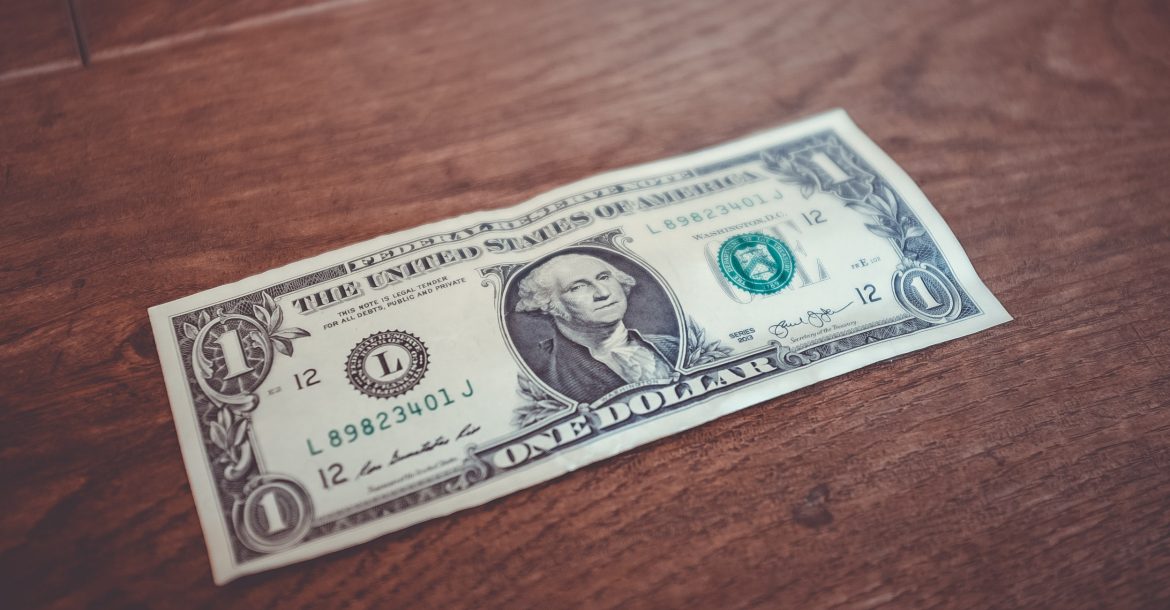
The US Dollar sustains its clout as the global reserve currency even though almost all major currencies in the developed and developing world is on free float, their value determined by forces of demand and supply and other macro-economic factors. Economic stability of the US economy is one of the fundamental reasons for the unabated power of the US dollar. According to IMF data, 62% of all forex reserves of central banks across the world are held in US dollars (totaling $6 trillion), is almost three times as the Euro which accounts for 22% of reserves. Other major world currencies of Japanese Yen, Swiss Franc, British Pound Sterling, Canadian Dollar, Swedish Krona can only boast single digit reserve percentages! In the foreign exchange market, 90% of trading involves US dollar. China leads the list with more than 3 trillion USD in forex reserves, almost three times the size of Japan. Nearly 40% of world’s debt instruments are issued in US dollars. During the Great Recession of 2008, non-American banks had more than 27 trillion in international liabilities denominated in foreign currencies. On that outstanding, 18 trillion was in US dollars. The dominance of US Dollar in international finance, especially in the global payment systems enables US to up the ante against its opponents, whether individuals, corporations or sovereign nations by banning them from using US Dollar in international export/import payments or own US Dollar denominated assets. US Dollar has proved to exercise far-reaching impact in global geopolitics and is a powerful weapon for maintaining the status quo unipolar world.
According to a US Federal Reserve data, there are approximately $2.05 trillion dollar notes in circulation and more than half of that estimated value is transacted outside United States. The erstwhile countries of the USSR and Latin America have a huge proportion of dollar bills as medium of exchange and unit of account in domestic day-to-day exchanges. Low inflation and economic stability of the US economy has resulted in huge demand for US government backed Treasury Bills (T-Bills) and other debt instruments. Japan and China are the largest investors in US Treasury Bills at 1.2 and 1.1 trillion dollars respectively, which is a whooping 45% of aggregate US debt.
Developing countries have balance of trade surpluses with the US, often an indicator of economic momentum and GDP growth. They produce goods that are cheaper due to location advantages in low labor costs, that are exported to affluent markets of Europe and US. Since most of the trade transactions are in US dollars, these developing nations face the unsavory prospect of currency appreciation and inflation when trade grows, receives payment in US dollars that are later converted into their local currencies. Any currency appreciation for developing economies that relies on export-oriented growth shall prove disastrous as exports become expensive and lose the competitive edge.
China allegedly weaponizes Yuan by deliberately undervaluing it for expanding export revenues. As an inflation targeting measure, these emerging economies park their trade surplus dollars in dollar denominated assets like bonds, traded in US markets. Foreign investors now hold $28 trillion in dollar denominated assets with an additional $2 trillion arriving annually in US shores. Currently more than 80% of overseas holdings in US dollars are in corporate bonds, stock markets and equity stakes in US corporations, which has diversified the risk portfolio from sovereign nations, foreign corporations and individuals investing mostly only in US Treasuries as the past trend. Around 60% of countries accounting for approximately 70% of global GDP still relies on Greenback as their anchor currency.
The cyclical appreciation and depreciation of US dollar profoundly impacts global economies. When dollar appreciates relative to other global currencies, exports from emerging markets become competitive in comparison to US products and services and vice versa. But it also augments the risk of dollar denominated repayments of borrowed capital in interest and maturity payments in developing economies. A very strong dollar may also lead to market volatility and weaken growth in these markets, due to spiraling prices of imported commodities like crude oil, primary and intermediary goods and components used for final finished products in manufacturing and subsequently increasing the price of exports. Paradoxically a strong dollar is the pre-requisite of it holding position as the global currency. Global commodities market, historically have their prices move inversely to the US dollar. Most emerging markets tend to be commodities exporters and therefore a strong dollar exacerbates vulnerability in emerging market economies.
When the dollar depreciates, the demand for US debt, equity, corporate bond and mortgage assets increase as they become cheaper to invest, when they are priced in foreign currencies. The dollar value in revenues of US corporations operating overseas as wholly owned subsidiaries (WOS) or equity partnerships increases and profit proceeds could be reinvested in stock markets or fund capital expenditure for product and market expansion in host countries or market penetration in other geographies.
With escalating geopolitical risks, trade wars and weaponization of currencies, powerful global players China and Russia are clamoring for a new independent One World Currency, not backed by any nation and therefore insulated from sovereign micro and macroeconomic risks creating a multi-polar world and balance of power. The Euro emerging as a global reserve currency at par with US dollar, predicted by the former US Federal Reserve chairman Alan Greenspan was jeopardized by the Eurozone crisis and lack of monetary policy consensus in Brussels. Therefore, until forces of necessity conjure up a new entity, a superior standard, a working model, the US dollar will reign as the formidable greenback and continue dominating the international financial system in the years to come. And truly cementing its status as a sine qua non in global affairs.