Editorial Note
In the early 13th century, Genghis Khan’s armies thundered through the Central Asian steppes with a ferocity rarely matched in history. Entire cities from Nishapur, Merv and Herat were razed to the ground and their populations massacred. Chroniclers describe the pyramids of skulls erected to terrorize the enemies. These instruments of psychological warfare were designed and deployed to annihilate any forms of resistance and retaliation from enemy camps. Yet these campaigns were not acts of mindless savagery alone. They were executed with logistical precision, intelligence networks, and disciplined military hierarchy – an early fusion of rational strategy with moral void.
The Mongol war machine lacked compassion and restraint despite its brilliant war-gaming. And that distinction defines the digital age. Today’s world no longer builds pyramids of skulls; it builds systems, networks, and algorithms. But the underlying impulse to dominate, dehumanize, and annihilate the “other” persists, now amplified by unprecedented technological reach. What has changed is not the human mind, but the scale at which its barbarism can operate. The instruments of terror have evolved with drones, missiles, autonomous weapons accentuated by digital warfare. As in the marauding past of Genghis Khan, military strategists in the 21st century show no mercy to innocent civilians in war. The Geneva Convention and Rome Statute that guides rules of engagement are made redundant. The disastrous consequences are carpet bombing of schools, universities, civilian and economic infrastructure and massacring innocents by the thousands with total impunity. With all the celebrated glory of civilizational progress, the human mind still lives in the barbaric age.
If there is any modern writer who has prophetically anticipated this condition, it is William Golding in his magnum opus, The Lord of the Flies. Published in 1954, the novel follows a group of schoolboys stranded in a deserted tropical island after a plane crash, trying to recreate order and civility to survive. Their fragile order collapses when one of them introduces the concept of a mythical “beast,” which quickly becomes a powerful symbol of fear and division. This beast, although imaginary, represents the creation of external threats that destabilize social cohesion. It is also the most powerful political symbol in the novel.
In contemporary geopolitics, external enemies are often deceptively conjured up for realpolitik ends. The specter of “evil regimes” and “axis of evil” are invoked to manufacture security paranoia and sustain ideological threat. In the aftermath of September 11, the United States, in close alignment with the military-industrial complex, amplified Islamophobia to legitimize the Global War on Terror, (GWOT) a campaign that generated staggering profits for defense giants such as Boeing, RTX Corporation, Northrop Grumman, Lockheed Martin, and General Dynamics. It wasn’t without precedence. The narrative of weapons of mass destruction (WMD) was meticulously cultivated to justify the invasion of Saddam Hussein’s Iraq, despite the absence of credible evidence. In Libya, humanitarian rhetoric framed through the doctrine of Responsibility to Protect (R2P) under a United Nations mandate, served to cloak a NATO intervention that ultimately dismantled the Gaddafi regime.
Yet beneath these shifting justifications lies a more enduring logic of power: the pursuit of strategic control over resource-rich geographies, particularly oil. The language of security, morality, and humanitarianism functions less as cause than as cover.
Long before the age of drones, precision strikes, and algorithmic warfare, William Golding’s Lord of the Flies issued a quieter but more enduring warning: the decisive battlefield is not technological, but psychological. The fault line between civilization and barbarism does not run between states or systems but through the human mind itself. The boundaries between sanity and savagery are becoming perilously thin. The on-going Iran-US-Israel war bears silent testimony to this moral catastrophe.
The British philosopher Thomas Hobbes encapsulated this paradox in his seminal work Leviathan, written in the shadow of the English Civil War in 1651. He argued that humans exist in a state of perpetual insecurity, causing “a war of all against all” driven by fear, competition and an incessant quest for power. The real reason for the mismatch between technological progress and moral decline is that we have evolved our tools but not ourselves. Science and technology operate on an exponential curve – each generation inherits and builds upon the accumulated knowledge of all predecessors. Moral and emotional growth does not follow this cumulative pattern. Every human being is still born as Golding’s child – vulnerable, tribal, hungry for dominance, and haunted by primal fears.
No child arrives in the world with the wisdom of Socrates preinstalled. Each soul must laboriously re-learn empathy, restraint, and the capacity for love from scratch, and consequently, character is formed in the storm and stress of the world: in the face of adversity and hardship, rejection and pain. If technology is cumulative, wisdom is painstakingly acquired and non-linear. The Vietnam War exposed this asymmetry with brutal clarity. The United States deployed overwhelming technological superiority – helicopter mobility, aerial bombardment and Napalm bombs. The supremacy in the skies failed to translate the unfettered military power into morally conscientious military campaign. Episodes such as the My Lai massacre revealed not merely the horrors of war, but the collapse of ethical judgement among ordinary men operating within an advanced military system.
In the 21st century, this imbalance has not diminished but has metastasized. A stark illustration lies in the growing reliance on algorithmically assisted warfare. In theory, precision-guided systems and data-driven targeting promise cleaner, more discriminating violence. In practice, they often operate as opaque “black boxes,” where flawed intelligence, biased datasets, or misclassification cascade into irreversible decisions and tragic consequences.
The missile strike on the Shajareh Tayyebeh girls’ school in Minab, Iran where more than 100 children were killed offers a chilling example. In its aftermath, President Donald Trump suggested that the strike may not have been American at all, hinting at Iranian responsibility, while Defense Secretary Pete Hegseth emphasized that the United States “does not target civilians” and that the incident remained under review. Such responses, calibrated to deflect blame and accountability, are aimed at setting spurious narratives far from truth, devoid of moral responsibility and ownership of wrongdoing. The normalization of such atrocities has become the order of the day.
The digital world, especially as shaped by social media, exemplifies a profound form of moral disengagement. Engagement algorithms and the attention-capture business model exacerbate it. The contemporary information ecosystem is engineered not for truth, but for click-baiting the user into doomscrolling. Shoshana Zuboff’s concept of “surveillance capitalism” captures this transformation: a new economic system in which human experience – what people search, click, like, share, their preferences and location – is harvested as data and used to predict and shape behavior for profit. What emerges is not a more informed citizenry, but a more manipulable one, succumbing to base instincts, breeding tribalism and identity politics in digital space. In this system, outrage is currency, attention is power, and contempt is monetized by permitting disinformation, misinformation, and malinformation.
René Girard helps explain this mechanism in his Mimetic Theory. It states that individuals do not simply hold beliefs; they imitate them, amplifying rivalry and collective hostility. In digital space, imitation accelerates, turning disagreement into polarization and polarization into moral conflict. Michel Foucault adds a further layer – modern power operates less through coercion than through the shaping of perception itself; a dynamic he explores in Discipline and Punish (1975). The digital age does not merely transmit information; it actively shapes what people come to see as reality.
The consequences are visible across contemporary societies. From Brazil and India to the United States, digital ecosystems have intensified majoritarian anxieties and recast politics as identity conflict. In the United States, MAGA-aligned social media ecosystems radicalized large swathes of the electorate through a relentless diet of grievance and conspiratorial content, culminating in the January 6th assault on the Capitol — a mob summoned and inflamed in real time by digital mobilization. In India, fabricated videos circulated on social media sparked the Muzaffarnagar riots of 2013, leaving over 60 dead and 50,000 displaced — a template for how manufactured digital outrage translates into communal carnage.
Daniel Kahneman, the American psychologist and Nobel Laureate elucidated the cognitive machinery of moral regression in his influential work, Thinking, Fast and Slow. He espouses two mental modes of cognition: namely System 1 activated in fight or flight situations and System 2, slow, deliberate and rational. The tools of the digital age especially pertaining to social media platforms are engineered to ensure that System 1 dominates at every user engagement. The doom-scrolling model, notification pings, like buttons, and algorithmically customized feeds ensure that emotion perpetually overrides reason. One of the disquieting consequences is that highly intelligent people, with stellar academic and professional accomplishments often succumb to cognitive biases, when System 2 is disengaged. It explains the loss of scientific temper and the rise of religious obscurantism even among the educated elites in countries such as India. The growth of knowledge need not be accompanied by the growth of wisdom.
Henri Tajfel’s Social Identity Theory offers a powerful lens for understanding contemporary polarization. Individuals derive meaning and self-worth from group membership, producing an instinctive divide between “us” and “them.” This is evident in movements such as Brexit, MAGA and the rise of Donald Trump, where complex policy debates, particularly on immigration that were reframed as identity struggles: nation versus outsider, people versus elite. Social media platforms like Facebook and Twitter (X) further intensify these divisions, reinforcing echo chambers and rewarding emotionally charged content.
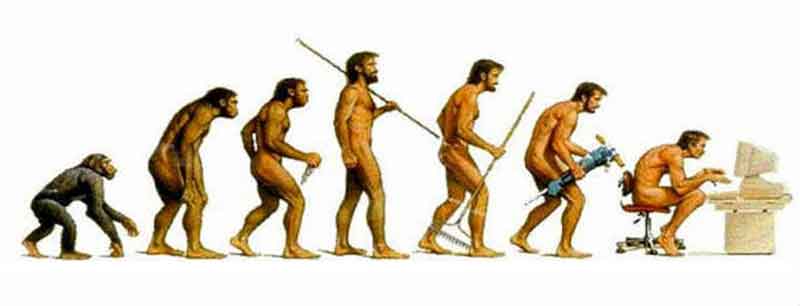
Stanley Kubrick brilliantly captures the essence of human progress in a single iconic moment from his film 2001: A Space Odyssey. In this cult classic an ape hurls a bone into the air – humanity’s first weapon, its first tool, its first act of dominion over another living creature – and in one of the most stunning cuts in the history of motion pictures, that bone becomes a spacecraft drifting in silent orbit. The passage of four million years captured in a single frame. It celebrates the vast distance humanity has traveled, from primitive beginnings to advanced technological achievement.
But the spacecraft is not the destination nor the end of human civilizational advancement. The bone spinning into a spacecraft is meant to transform into something more spectacular. The ape did not fundamentally evolve into the astronaut; instead, he changed his appearance, learned to solve new problems, and developed the capacity to calculate trajectories rather than throwing at close range. This primitive atavistic mind has since evolved to create civilizations, societies, culture, symphonies, philosophers and poets.
But something else was happening beneath the ascent, invisible in Kubrick’s luminous edit. The human mind that designed the Sistine Chapel also designed the gas chamber. The same civilization that produced Shakespeare started World Wars, built Auschwitz and pulverized Gaza. And by designing the nuclear warhead, weapons of mass destruction – drones, missiles, cluster bombs and hate spewing social media algorithms, the sophisticated human mind is fast retrogressing into the same primitivism that hurled the bone at a rival skull in the African dust. Kubrick’s timeless edit showed the ascent of technology and civilizational progress. His cut also contains a darker truth than triumph: the creature holding the technology has never, in any meaningful sense, left the Stone Age.